Independent Retail Store
Retail & Specialty · AI Solution Architect Proposal Template
Example deliverable generated by the AI Solution Architect from a typical small-business profile. Not actual customer results. Real outcomes are sized during your discovery call.
What We Found
This independent store has the right taste but the wrong operating system. Inventory counts take hours and still miss the truth, loyalty lives on paper punch cards with no usable customer history, and buying decisions are based on instinct instead of sell-through velocity, margin, or repeat purchase patterns. Best sellers stock out, slow movers linger too long, and the margin leak is mostly invisible until month-end.
Pain points we identified
- Manual counts take 8 hours a month and still leave inventory 5-10% off
- Paper punch cards create loyalty friction and capture zero information about who buys what or how often
- POS data exists but is not translated into buying decisions, reorder thresholds, or margin insight
- No early warning when a SKU is stalling, tying up cash in dead inventory while top sellers stock out
"Independent retail wins on curation and relationship. When the back office is guesswork, you end up making margin decisions with the least reliable tool in the building: memory."
What We Recommend
Inventory Visibility, Digital Loyalty & Margin-Aware Buying
We connect your POS to a real-time inventory and sell-through dashboard, replace punch cards with digital loyalty that ties purchases to actual customers, surface weekly buying recommendations based on margin and velocity, and flag slow movers early enough to markdown, bundle, or stop reordering before they become shelf clutter.
Mahoosuc products applied
- Market Intelligence — inventory velocity analysis and slow-mover identification
- SalesOS — digital loyalty enrollment flows and purchase history tracking
- ContentStudio — personalized customer re-engagement campaigns from loyalty data
Better service for your customers
Your shoppers find key items in stock, feel recognized when they return, and receive offers that actually match how they buy. The store becomes easier to run and more differentiated from commodity retail.
Your Day, Before and After
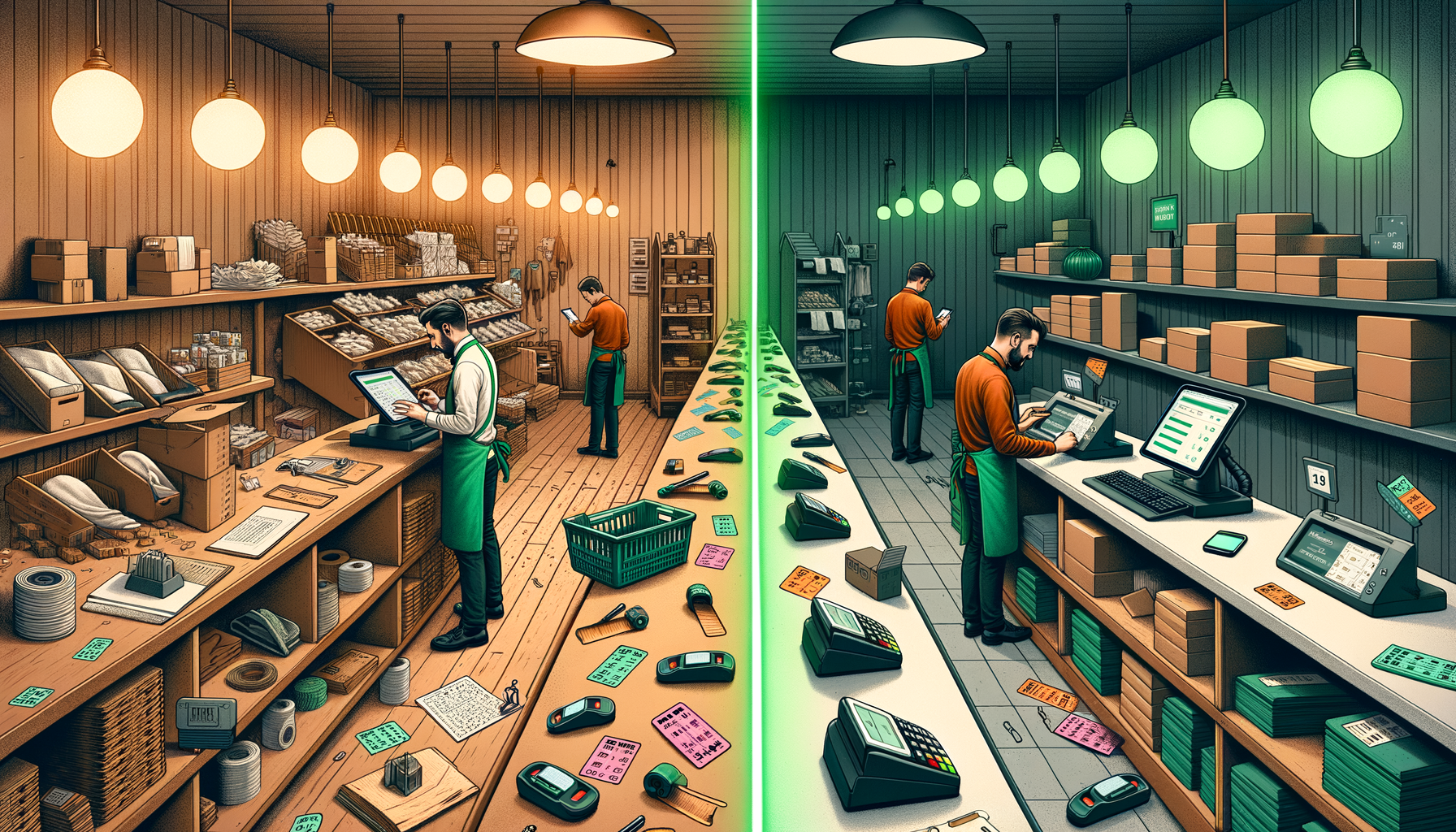
Your Day, Before and After
What changes when the admin work disappears.
- Monday AM
Walk the floor doing a spot count. Numbers don't match the spreadsheet again — off by 6%.
- Tuesday
Customer asks about their punch card — they lost it. Starts over at zero. They're visibly annoyed.
- Wednesday
Place a reorder for the same product that's been sitting for 90 days. Nobody flagged it as dead stock.
- Thursday
Run out of the best-selling SKU — it wasn't on the reorder list. Turn away two customers.
- Friday
Monthly inventory count day. Close the store for 3 hours. Count still doesn't reconcile.
- Saturday
A regular asks if you have any new arrivals in their style. You're not sure what they usually buy.
- Monday AM
Dashboard shows real-time inventory — no manual count needed. Accuracy is 98%+.
- Tuesday
Customer looks up their loyalty points on their phone. 340 points toward a $20 reward. They smile.
- Wednesday
Slow-mover alert fired last Friday: that product flagged for markdown strategy. No dead stock order.
- Thursday
Best-selling SKU auto-reordered 10 days ago when it hit the threshold. In stock all week.
- Friday
Weekly POS buying report ready in the dashboard. 12 minutes to review, approve the reorder list.
- Saturday
Pull up the regular's purchase history — recommend the new arrival that matches their pattern. They buy it.
They gained back 10 hours/week back. Used it to sourced two new product lines and started a monthly buyer's night event.
How the numbers get real
We don't publish point-estimate savings on this page. Every business is different — the friction in your day, the staff hours you'd actually recover, and the revenue we'd unlock all need a real conversation before anyone should believe a number.
On the discovery call, the AI Solution Architect walks through your current operation, sizes the workflow above with honest range estimates, and delivers a confidence-labeled implementation plan. The implementation then proves the estimate.
- T-shirt sized scope (S / M / L / XL) with effort and cost ranges
- Stack recommendation tied to your existing tools
- Architecture diagram and phased implementation plan
- Confidence labels on every estimate so you know what's solid and what needs more discovery
How We Do It
Total timeline:
Discovery & Assessment
2 weeksWe audit your current workflows, document your tools and processes, identify the highest-leverage automation opportunities, and align on success metrics with you.
- Workflow audit document
- Integration map
- Success metrics agreement
Implementation
3–4 weeksWe build and configure your automation stack. Every integration requires your approval before going live. You see each piece working before we move to the next.
- Working automation flows
- Staff walkthrough sessions
- Approval on each step
Testing & Handoff
1–2 weeksWe run parallel operations — old process and new — to validate results. You keep full access to your data and configuration. We hand off with documentation and direct support.
- Parallel validation results
- Full documentation
- Direct support line
Human approval on every step. Nothing goes live without your sign-off.
Ready to Talk?
Book a 30-minute call to discuss this proposal. We'll walk through the numbers and answer every question.
This proposal was generated by our AI market intelligence platform and reviewed by Aaron Bentley, operator of Mahoosuc Solutions. All numbers are estimates based on industry benchmarks and similar implementations.